
Falls are not an inevitable part of aging. According to the CDC, falls are the leading cause of injury death among adults 65 and older, causing more than 38,000 deaths in 2021 and nearly 3 million emergency department visits that same year. The good news is that falls can often be prevented.
Building leg strength and better balance ranks among the most effective ways to lower fall risk, whether an older adult is aging in place at their own residence or living in a senior living community. Practical fall-prevention exercises for seniors, including chair yoga and balance work, help people stay active and protect their independence at Heritage House of Portage and beyond.
Why Fall Prevention Matters for Older Adults
Fall risk rises with age, and the consequences can be serious. The CDC reports that older adult falls lead to about 300,000 hip fracture hospitalizations each year, and recovery from a broken hip is difficult, with many people unable to return to living on their own afterward.
Beyond the physical injury, a single fall can shake a person’s confidence and lead them to limit their activity, which further weakens muscles and raises the risk of another fall. This matters at every stage. Someone who remains in their own residence needs strength and balance to navigate stairs, bathrooms, and daily errands. Someone in assisted living benefits from the same physical activity, with support close by to keep moving. Fall prevention tips for seniors apply across both settings, and the earlier a person starts, the more benefit they gain.
What CDC STEADI Guidance Recommends
The CDC’s STEADI program, short for Stopping Elderly Accidents, Deaths and Injuries, outlines proven steps to lower fall risk. Several fit easily into a typical week:
- A doctor can review current medications, since some cause dizziness or drowsiness.
- A healthcare provider can advise on vitamin D supplements and osteoporosis screening.
- An eye doctor should check vision once a year, and eyeglasses should stay up to date.
- Clearing clutter, adding grab bars near the tub and toilet, installing railings on both sides of the stairs, and brightening the lighting all reduce hazards in the living space.
- Regular strength and balance exercises that make the legs stronger and improve stability lower the odds of a fall.
That last point matters most. The CDC names activities such as tai chi as good examples, and any regular exercise for seniors that targets the legs, core, and balance can make a measurable difference over time.
5 Balance and Strength Movements to Practice at a Chair
Many effective fall-prevention exercises for seniors require no equipment beyond a sturdy chair. These low-impact exercises for seniors can be done at a resident’s own pace, and a team member or physical therapist can add support for anyone newer to movement. Starting slow, stopping if anything hurts, and checking with a doctor first are all wise for people managing health conditions.
- Seated marching lifts one knee at a time toward the chest while sitting tall, warming the hips and strengthening the muscles used for walking.
- Ankle circles and heel raises, done while seated, keep the ankles flexible and build the lower-leg strength that supports each step.
- The sit-to-stand, which the CDC calls the chair rise, involves rising from a chair without pushing off with your hands, then lowering slowly to build the leg strength needed to stand up with control.
- Seated leg extensions straighten one leg out in front, hold for a few seconds, then lower it, strengthening the thigh muscles that support the knees.
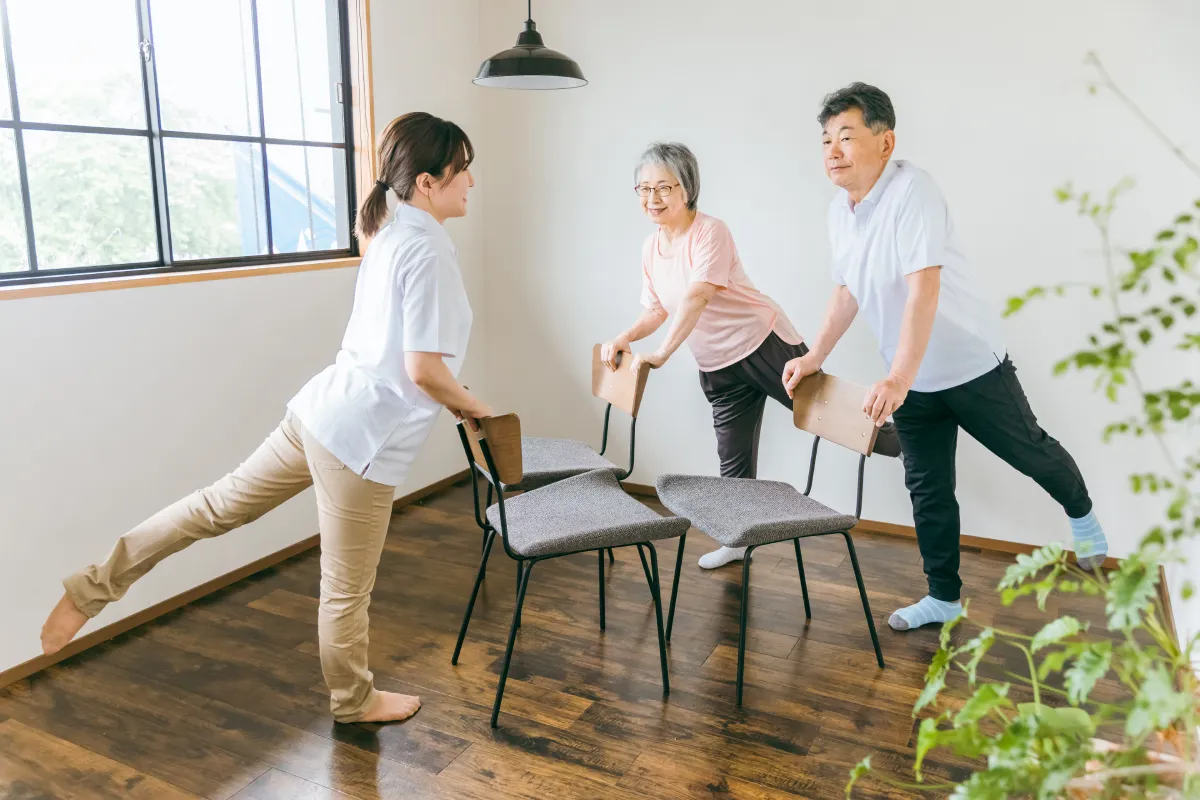
- Standing behind the chair with both hands on the backrest, slow heel-to-toe steps and small side leg lifts train the balance reactions that keep a stumble from turning into a fall.
How Chair Yoga Supports Strength and Balance
Chair yoga adapts traditional yoga poses so they can be done while seated or while holding onto a chair for support. It is a low-impact option that targets flexibility, posture, breathing, and balance without requiring anyone to get down to the floor.
For older adults who feel wobbly on their feet, chair yoga offers a way to build strength and body awareness at a manageable pace. Families often search online for “exercise classes for seniors near me,” hoping to find low-impact exercises that fit an older loved one’s ability level.
The resident life at Heritage House of Portage offers regular fitness programming that addresses those needs in one place, with a team on hand and no driving required. Chair yoga, seated stretching, and guided movement classes provide residents with consistent opportunities to keep their bodies strong.
Fall Prevention Programs for Seniors at Heritage House of Portage
At Heritage House of Portage, staying active is built into the weekly routine. Assisted living residents take part in physical activities planned and led by the Life Enrichment team seven days a week, including morning fitness.
The community also offers on-site therapy services, so residents who need physical therapy can work on strength and balance without leaving the building. One standout is the Stay Strong, Stay Independent wellness series. On select Fridays at 10 a.m., Powerback Rehabilitation Director and Physical Therapist Luke Stangl leads sessions focused on helping older adults stay active, prevent falls, and keep their independence, followed by a group exercise class.
Fall prevention programs for seniors turn CDC guidance into regular practice, right where residents live. Add in larger private apartments, three chef-prepared meals a day, weekly housekeeping and laundry, scheduled transportation, and a smaller, cozier setting where the team knows each resident by name, and daily life in Portage, WI, supports both activity and independence.
Frequently Asked Questions About Fall Prevention Exercises for Seniors
Strength and balance exercises give the most protection. The CDC points to activities that make the legs stronger and improve balance, such as tai chi, chair rises, and heel-to-toe standing practice. Seated options like leg extensions and ankle circles work well for anyone starting or managing limited mobility. Doing a mix of these a few times a week and building up slowly tends to bring the best outcomes. A doctor or physical therapist can help match specific movements to a person’s ability and health history.
Chair yoga builds the flexibility, posture, and balance that keep a person stable on their feet. Because the poses are done seated or with a chair for support, the movements remain low-impact and accessible, even for those who cannot get down to the floor. Regular practice also improves body awareness and breathing, both of which help a person catch themselves when they feel off balance.
Falls are common with age, but they are not an unavoidable part of it. The CDC is clear that falls can be prevented, and regular exercise for seniors is a proven tool. Building leg strength, improving balance, and staying active all reduce the odds of a fall and help a person recover more quickly if one does happen. Alongside exercise, regular medication reviews, yearly eye exams, and reducing hazards around the living space round out an effective plan.
A good class meets people at their ability level and offers low-impact exercises for seniors that can be adjusted up or down. Trained instructors, seated and standing options, and a pace that leaves room for questions and rest are all worth seeking. In a senior living community, this programming is already part of daily life, with a team nearby and no need to drive to a separate class. Consistency matters more than intensity, so a class that residents attend regularly is worth more than an occasional intense session.
The general aim is strength and balance work on most days of the week, though even two or three sessions weekly bring benefit for someone just starting. Short, regular sessions are easier to keep up than long, occasional ones. A physical therapist can set a schedule that fits a person’s fitness level and any health conditions, and programs like the ones at Heritage House of Portage build this routine into the week.
Building Strength and Balance That Lasts
Fall prevention is not about doing everything at once. It is about small, regular steps: a bit more leg strength, a little better balance, and a routine that keeps the body moving. Whether an older adult practices chair yoga at home or attends guided fitness sessions in a community, consistency helps protect mobility and independence over time. At Heritage House of Portage, that daily practice comes with a team close by, so residents can stay active with support whenever they need it.
Schedule a Visit to Heritage House of Portage
See how planned fitness, therapy services, and daily support come together for residents in Portage, WI. Schedule a visit at Heritage House of Portage to learn more.
This article should not replace medical advice. Talk with a doctor before starting a new exercise program, especially if you are managing a health condition or recovering from a fall.